
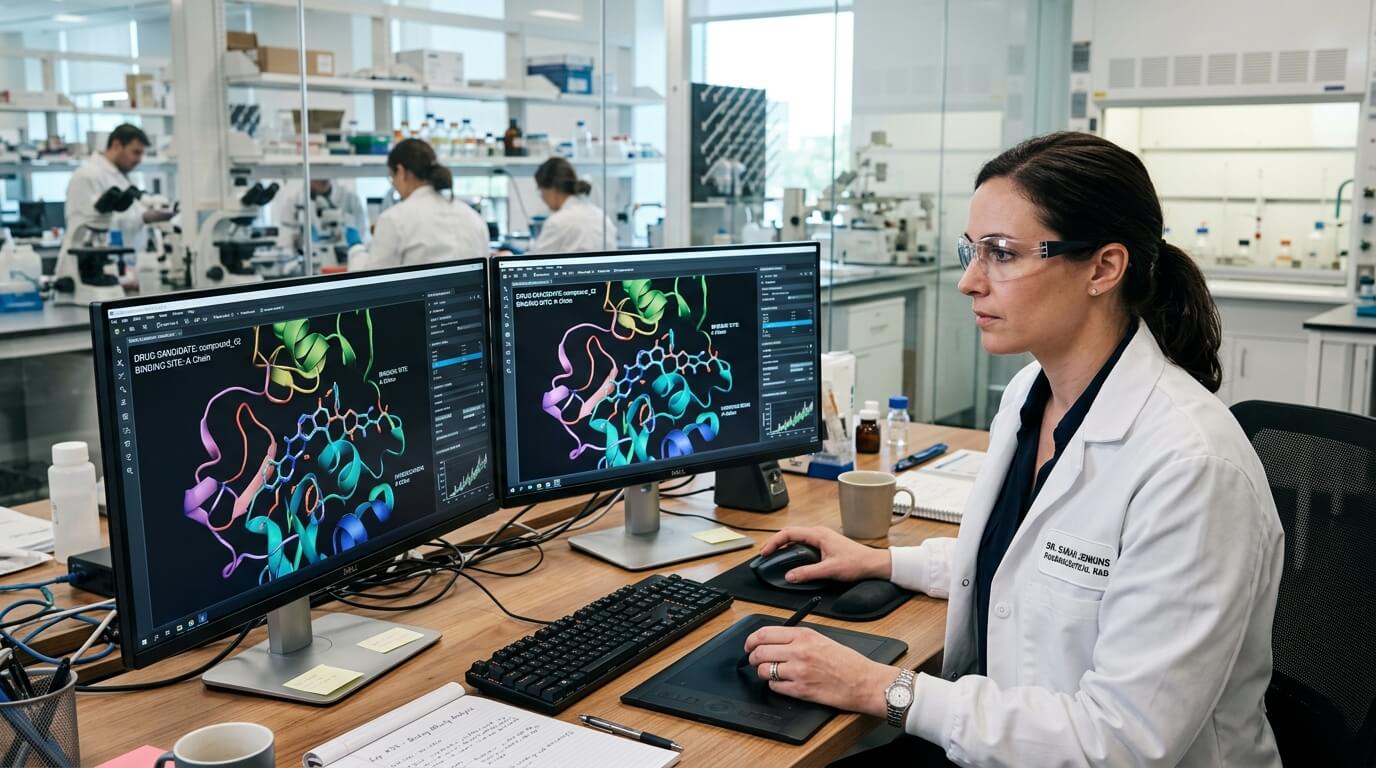
For decades, the path to developing a new medicine was predictable, albeit incredibly slow and expensive. Scientists would spend years in a ‘wet lab’ mixing chemicals in petri dishes, a process known as in vitro testing, before moving on to animal studies, or in vivo testing. While these methods are still foundational to science, a third pillar has emerged that is radically changing the timeline of discovery. This is the world of computer-based simulation, where researchers use an in silico model to predict how a human body might react to a new compound before a single physical drop of it is even manufactured.
The term ‘in silico’ literally means ‘in silicon’, referring to the silicon chips that power our computers. It represents a sophisticated blend of biology, mathematics, and computer science. By creating a digital twin of a biological system—whether that is a single cell, an entire organ like the heart, or a complex metabolic pathway—scientists can run thousands of experiments in a fraction of the time it would take to perform them manually. This isn’t just about saving time; it is about precision and the ability to ask ‘what if’ questions that would be too dangerous or logistically impossible to test on living subjects.

What actually goes into an in silico model
It is easy to think of these models as simple software programmes, but the reality is far more complex. A high-quality model is built upon decades of accumulated biological data. It requires an intricate understanding of how molecules interact, how electrical signals travel through tissue, and how genetic variations influence drug metabolism. These models use complex algorithms and differential equations to simulate the dynamic behaviour of biological systems over time.
To ensure these simulations are accurate, researchers must feed them high-quality data derived from real-world experiments. The process involves several key components:
- Mathematical Frameworks: These are the core equations that describe biological processes, such as the rate at which a drug enters a cell or how a protein changes shape.
- Biological Datasets: Huge repositories of genomic, proteomic, and clinical data that provide the ‘rules’ the model must follow.
- Computational Power: The hardware required to process millions of variables simultaneously, often involving high-performance computing clusters.
- Validation Protocols: A rigorous process where the model’s predictions are compared against known experimental results to ensure it behaves like a real biological system.
How digital simulations are streamlining drug discovery
The traditional drug discovery pipeline is notorious for its high failure rate. Many compounds that look promising in a lab environment fail when they reach human trials, often because of unforeseen toxicity or lack of efficacy. This is where an in silico model provides an immense advantage. By simulating the drug’s interaction with the human body early in the process, researchers can identify ‘red flags’ long before the clinical stage.
For instance, if a potential new drug for hypertension shows a high probability of interfering with the heart’s electrical rhythm in a simulation, the project can be halted or the molecule can be redesigned. This ‘fail early, fail cheap’ philosophy saves pharmaceutical companies billions of pounds and, more importantly, protects human volunteers from potentially harmful side effects. It allows researchers to narrow down thousands of potential candidates to just a handful of the most promising leads, focusing their resources where they are most likely to succeed.
The ethical and practical benefits of going digital
Beyond the financial and temporal advantages, there is a significant ethical drive behind the adoption of computer modelling. The scientific community has long been searching for ways to reduce, refine, and replace animal testing—the ‘3Rs’ principle. While we are not yet at a point where animal models can be eliminated entirely, the use of digital simulations has significantly reduced the number of animals required for early-stage toxicity screening.
Furthermore, these models allow for a level of personalisation that traditional testing cannot match. We know that people react differently to medicines based on their age, gender, and genetic makeup. An optimised in silico model can be adjusted to represent different patient populations, helping doctors understand why a drug might be life-saving for one person but ineffective for another. This is the cornerstone of the move towards personalised medicine, where treatments are tailored to the individual rather than a ‘one size fits all’ approach.
Key areas where these models are making a difference:
- Cardiology: Simulating the electrical activity of the heart to predict drug-induced arrhythmias, which is one of the leading causes of drug withdrawals.
- Oncology: Modelling how tumours grow and how they might develop resistance to specific chemotherapy treatments.
- Pharmacokinetics: Predicting how a drug is absorbed, distributed, metabolised, and excreted by the body over time.
- Neurology: Mapping the complex neural pathways to better understand the progression of diseases like Alzheimer’s or Parkinson’s.
The challenges of modelling biological complexity
Despite the incredible progress made in this field, it is important to recognise that the human body is arguably the most complex system in existence. Creating a perfect digital replica is a monumental task. One of the primary challenges is ’emergent behaviour’—the phenomenon where a complex system exhibits properties that its individual parts do not have. Even if we understand every single protein in a cell, we might not fully predict how the entire cell will behave in a novel environment.
Data quality is another significant hurdle. A model is only as good as the information used to build it. If the underlying experimental data is flawed or biased, the simulation will produce inaccurate results. This is why there is such a heavy emphasis on the characterisation of data and the standardisation of modelling techniques across the global scientific community. Researchers are constantly refining these tools, incorporating new findings from the fields of artificial intelligence and machine learning to make the simulations more robust and predictive.
Integrating AI with biological simulations
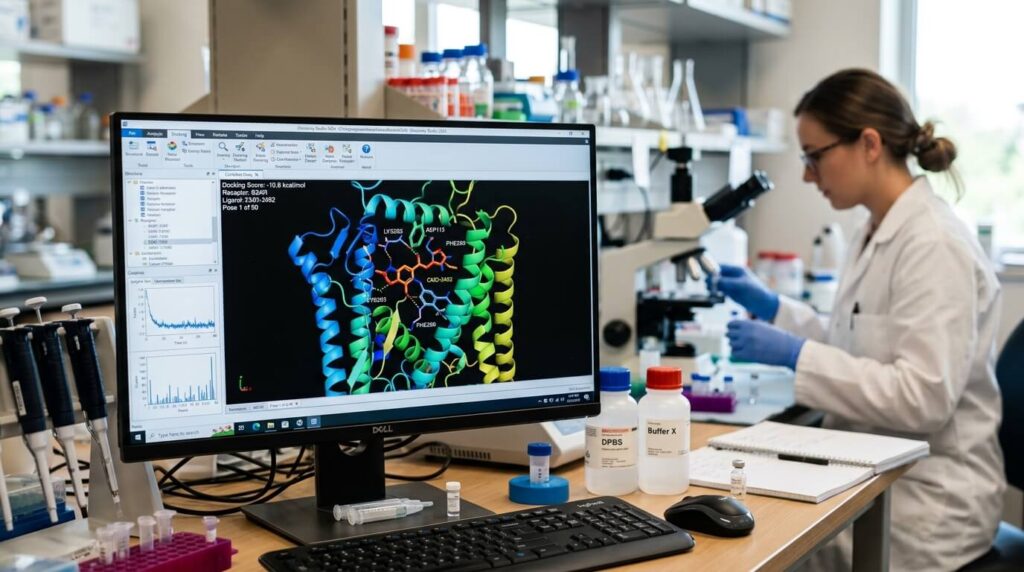
The marriage of traditional mechanistic modelling and modern artificial intelligence is the next great frontier. While a traditional in silico model relies on known biological laws, AI can find patterns in data that humans might miss. By combining these two approaches, scientists can create ‘hybrid’ models that are both grounded in biological reality and capable of learning from new data in real-time.
This integration is particularly useful in the study of rare diseases, where experimental data is often scarce. AI can help fill the gaps in our knowledge, allowing researchers to build functional models even when they don’t have a complete picture of the disease’s pathology. As computing power continues to grow and our biological datasets become more comprehensive, the role of these digital tools will only expand, eventually becoming a mandatory part of the regulatory approval process for every new medicine developed.
The transition towards a more digital-centric approach to biology isn’t just a trend; it’s a fundamental shift in how we understand life and treat disease. By embracing these computational tools, the scientific community is moving towards a future where medical breakthroughs are more frequent, treatments are safer, and the path from a brilliant idea to a life-saving medicine is shorter than ever before. The ability to simulate life inside a computer is no longer the stuff of science fiction—it is the engine driving modern medical innovation forward.

A horticulture writer passionate about floral design, plant care, and the artistry of botanical arrangements for homes and events.
